A New Use Case for Bill C-34
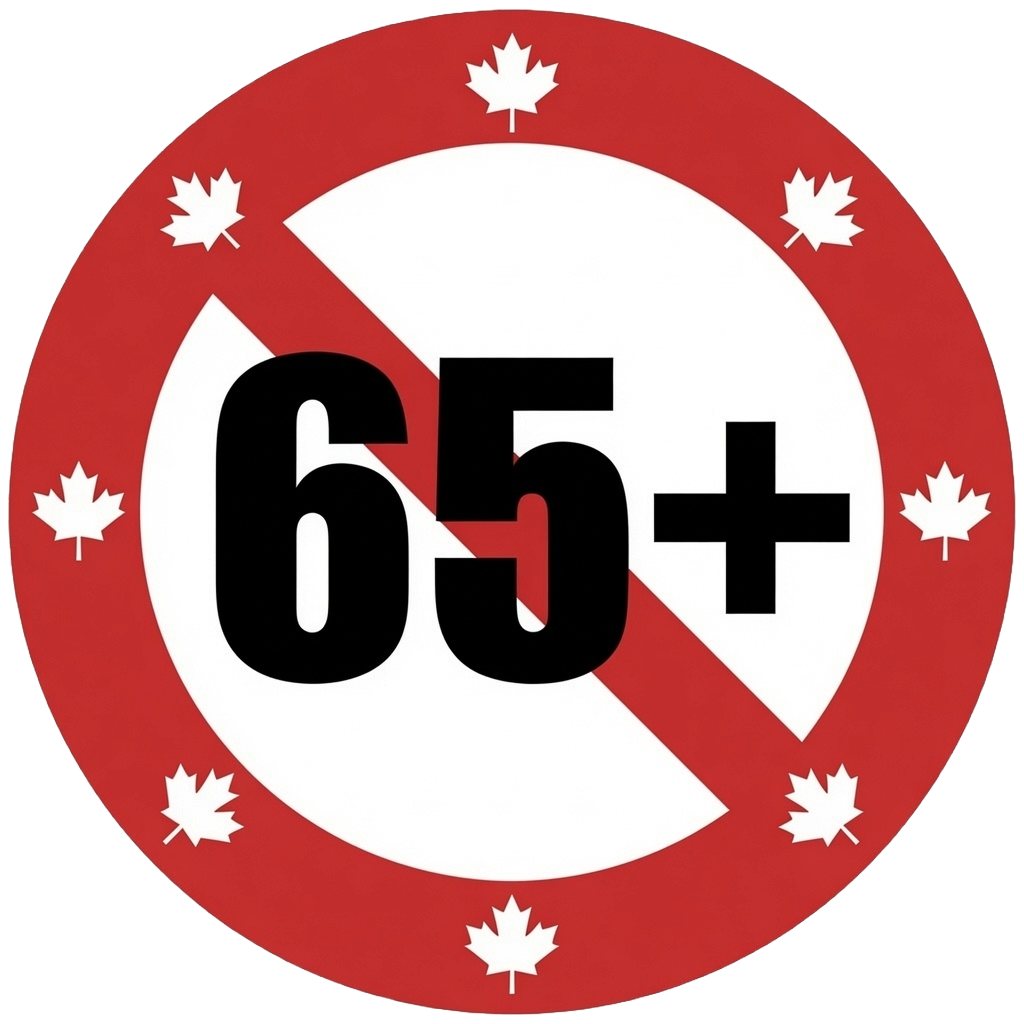
#BanBoomers — 65+ banned from social media

It's time to ban boomers 65+ from the internet.

The rate at which boomers are fooled by AI content and foreign disinformation is a threat to our democracy. Seniors are the demographic most targeted by online fraud.

We will stop at nothing to protect our most vulnerable Canadians. And Bill C-34 gives us that power.

The government wants to enforce ID verification on the internet, to protect teenagers. We will expand that protection onto seniors 65+.

Canada's Bill C-34 — the Safe Social Media Act — creates a new federal Digital Safety Commission, to be used to bar under-16s from social media platforms. It polls at 75% approval. The premise: young people are too vulnerable to be trusted with unsupervised access to social media, and it's the government's job to protect them, even if it means putting an end to decades of internet freedom.

We agree the principle is worth examining. So let's examine it consistently.

Seniors (65+) are the demographic most successfully targeted by online fraud. They are the most likely to share foreign disinformation. They are the most likely to be deceived by AI-generated content. By the bill's own criteria — vulnerability, documented harm, inability to self-protect — they are the group that most urgently needs intervention. And we will make it happen.

If paternalism is the right approach, then let's go all the way. If it isn't the right tool, oppose the bill.

Read the full manifesto →

What Bill C-34 Lets Us Do

"To keep one 15-year-old off Instagram, or one 67-year-old off Facebook, every adult in Canada has to prove their identity to log in. That is the bill."

You cannot enforce an age restriction without verifying the age of every user. Age verification at scale means identity verification at scale — it pushes the entire country toward mandatory digital ID for routine internet use.

That creates a permanent, centralized identity-data honeypot. A database of who visits what, who says what, authenticated by government-recognized ID. Any future government — this one or the next — can point the Digital Safety Commission's new powers wherever they want: at protesters, at journalists, at political opponents.

Since the internet's conception, it has been a place for anonymity, pseudonymity, and free expression. It has allowed marginalized groups to find community and support. It has allowed whistleblowers to share information without fear of retribution. It has allowed political activists to organize and affect real change. Is it worth sacrificing that for the sake of protecting vulnerable seniors and teenagers?

If we accept this sacrifice, then we cannot accept half-measures. Bar both under-16s and over-65s, or bar neither.

Reasonable questions, answered.

If C-34 passes? Yes! We will absolutely make this a legitimate political position in Canada. Our preference however is to prevent the bill from passing in the first place.

65+ voters make up less than 25% of the electorate. Furthermore, young people approaching voting age are furious. We may not succeed immediately, but with each year that passes, the math becomes more in our favour.

No. We are not claiming seniors are incompetent or deserve to be treated as second-class citizens. We are citing the actual, documented statistics the government uses to justify teen restrictions — and noting that those same statistics apply, by the government's own metrics, to older users.

To build real support for a 65+ social media ban, to increase scrutiny of universal age-verification of Bill C-34. Full repeal is the aspiration. A realistic win is an amendment that removes mandatory identity verification, or redirects the policy toward less authoritarian approaches — such as regulating short-form algorithmic feeds, requiring platform transparency, or restricting smartphone sales to minors rather than building a national identity database.

Yes. If you believe a mandatory national identity-verification system is a disproportionate and dangerous response, there are better tools. We could restrict smartphone sales to minors. We could regulate short-form algorithmic feeds, proven to be harmful to mental health. We could educate seniors on how to avoid scams, and detect AI. We encourage the government to consider alternatives first.

For now, the ban would apply to individual private accounts only. Organizations, institutions, and official public figures would retain the ability to maintain official social media presences. A retired schoolteacher's personal Facebook account is in scope. The Prime Minister's official communications office is not.

A group of Canadians concerned about online privacy and civil liberties. We are not currently incorporated as a formal organization. We are not affiliated with any political party or ideology.

Support us? Oppose us? Take action either way

If you want to ban boomers

Join the movement. Talk to your friends, discuss it with your aging loved ones, and spread our message on social media.

Grow Our Movement

If you think this is absurd

The only way to guarantee a 65+ ban never happens — not today, not under a future government — is to stop Bill C-34.

Voice Your Concern

Get updates as Bill C-34 moves through Parliament.

We'll send you key votes, committee hearings, and action opportunities. No spam. Unsubscribe any time.